
FCDO governance guru/wonk (gonk?) Ben Powis reflects on some of the whiplash moments he’s experienced in multiple countries.
Moments in history come in many forms – and I have seen a few. The 2015 earthquake in Nepal, the 2021 coup in Myanmar, a new government in Zambia in 2021, and the COVID-19 pandemic, well…everywhere.
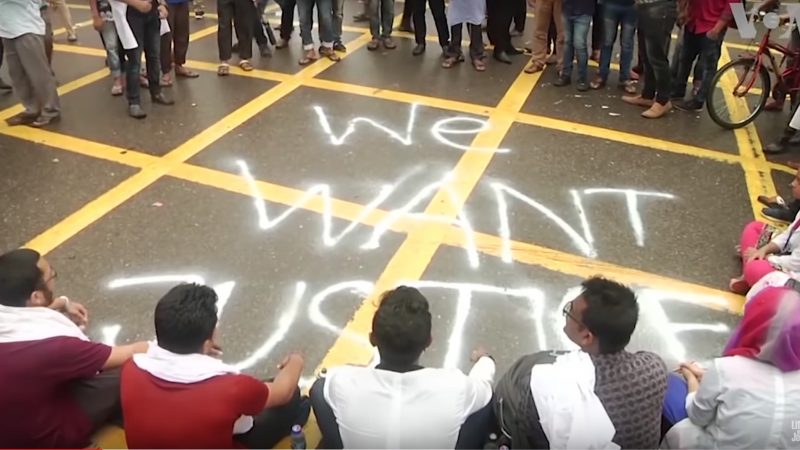
Bangladesh is experiencing one such moment now. While every moment is different, they share a common theme of disruption. Politics are rapidly unsettled. Institutions are in turmoil. Power dynamics are in flux, and the rules of the game are up for grabs. In all cases, expectations (and often promises) for ‘big change’ are high. But can these moments be a chance for genuine reform?
The short answer is yes – but only if we change the way we work. This means taking the concept of agility and ‘thinking and working politically’ to a new level. This is harder than it should be, not least because these times of crisis leave a significant impact on people and programmes, which makes it hard to step back and think strategically. Creating the space to do so is vital to ensure that we don’t try and proceed with ‘business as usual’ or implement plans created in a different era which run the risk of turning irrelevant in the new context.
Some guiding principles to thrive in such opportune moments:
- Storming and Norming: The initial stage of a disruption is a unique moment when ‘it’s all up for grabs’. No one has a plan; power is unclear and the space for ‘good ideas’ is open. But this space closes fast and it is important to use it well. Getting in early, listening and making ourselves useful should be our primary objective.
- Spreading the net wide: Crisis breeds new players – often people we have not been working with before. Student movements and community organisations emerge and change our understanding of civil society. New advisers take centre stage. It is not clear who will hold power and influence in future but taking the time to engage broadly (beyond the ‘usual suspects’) is both a way to get a finger on the pulse and build relationships that can endure.
- Deliver fast: A lot needs to be done, and often the centre of power will struggle to deliver. Being ready and able to act on requests – even when they fall outside our programme – is important to cement the relationships and build trust. Two-page policy think pieces produced in 24 hours (hand delivered and unbranded) really work!
- Communications and expectation management: A constant theme in these times is weakness in messaging… where silence builds tensions. Any support towards this can go a long way – and there is normally appetite. I am often struck by how neglected and important policy communication is – and that it remains outside the traditional areas of support.
- Embracing risk: Working in a crisis or transition means taking risks. Political changes often come with retribution or challenges to legitimacy and there is a new level of volatility. Setting out these risks early and increasing the ‘battle rhythm’ of monitoring and reflection can help in taking on these risks.
- Prioritisation and delivery: Unsettled politics often limits the capacity to deliver. Institutions (and people) take time to adapt to calling for rapid options on defined priorities. Prioritisation often proves a to be a challenge and institutional changes are protracted – which make it hard to deliver even on ‘quick wins’. Understanding and working with these challenges is essential.
Diving into a moment in history can yield real opportunities – but only if we take the idea of agility and ‘thinking and working politically’ to a new level. In the first instance, this means becoming a part of the ‘storming and norming’ phase and adjusting our approach to work with fluidly and searching for opportunities. But the last lesson is key – moments in history are rarely linear. They drag on. Often it takes years to settle into a new order – and this order will be based on enduring contests. Seizing the moment is important, so is being prepared for the long haul. Supporting the pathway from transition to reform means doing both well.
Ed: And here’s how not to respond to a moment in history – the legendary fitness trainer video from Myanmar, blissfully unaware of the coup going on behind her