
September 16, 2025
In charting Bangladesh’s remarkable progress on a range of social indicators since the 1970s, Naila Kabeer explores the critical role played by women’s agency. How were women able to challenge existing gender norms in the context of the “lived” Islam of their culture? What are the lessons of this episode – and what nuances are offered vis-à-vis the more “universal” path to progress and emancipation generally assumed by Western feminists?
Read more >>

Jobs were moved – but not power: the failings of ‘decolonisation’
July 16, 2025
If the development sector is serious about decolonisation, it must stop confusing optics with real, transformational change, argues Awssan Kamal.
Read more >>

The old neoliberal consensus on trade and developing countries is dying… so what will replace it?
July 15, 2025
The failure to deliver for poorer countries and the Trumpian backlash against free trade has shaken the dominance of the liberalisers and deregulators, says Duncan Green. He reports back from a recent gathering where experts unpicked emerging themes in a chaotic time for global trade policy: including the shift away from the multilateral system to bilateral treaties; and the heartening success of countries from Rwanda to Vietnam to Ecuador that have defied the old consensus.
Read more >>

Water security is not just an engineering problem: it’s about power
June 11, 2025
How to finance real water justice around the globe? Jo Trevor on four insights from a thought-provoking workshop at the recent Marmalade Festival in Oxford.
Read more >>
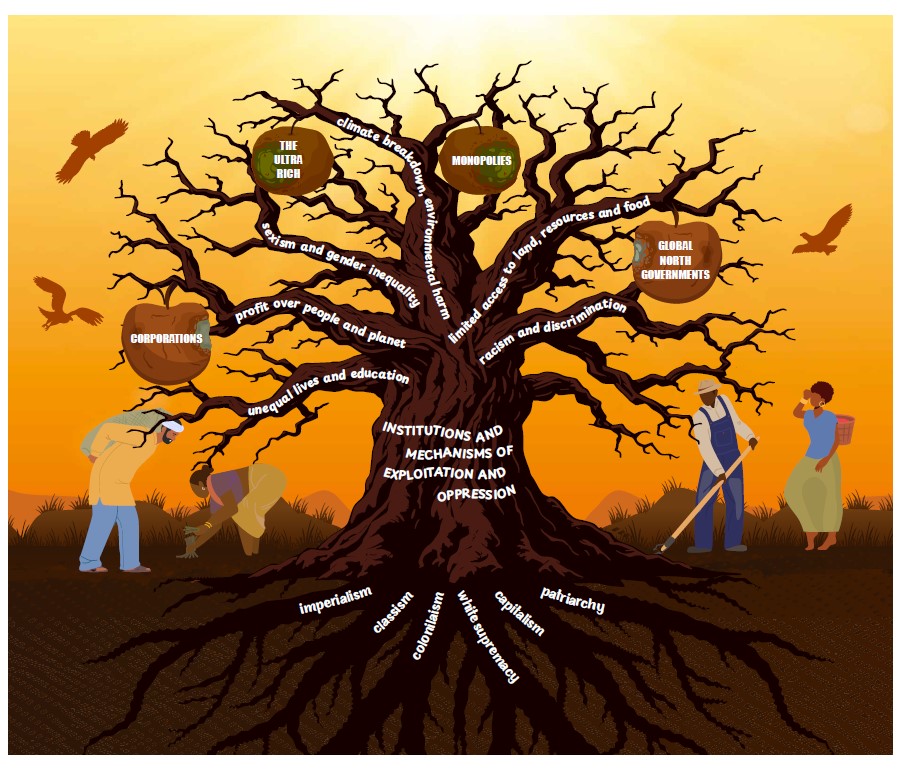
Why the campaign for reparations must put gender justice at its heart
January 30, 2025
Millions of women in the Global South earn a pittance, own no wealth or land and do far more unpaid care than men – and much of their condition today can be traced back to the economic devastation caused by both colonialism and the extractive economic system it created. That’s why any plan for redress must include justice for women. In the latest blog in our World Economic Forum series, Lurit Yugusuk and Hazel Birungi set out five ways to do that…
Read more >>
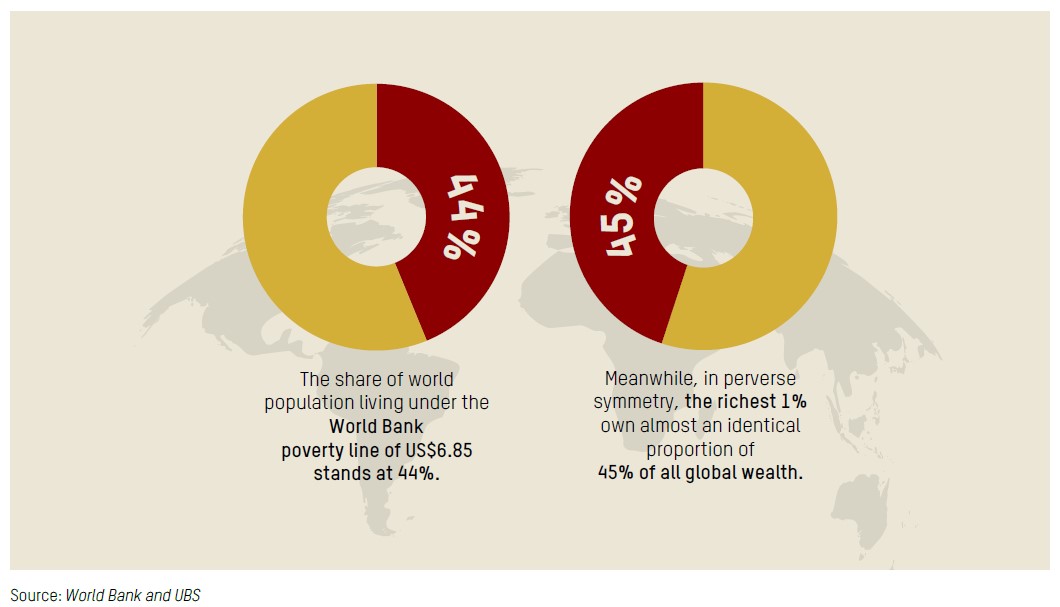
Want to tackle inequality? Start with fair taxes and giving the Global South a real voice at the IMF and World Bank
January 22, 2025
Global inequality will continue to spiral in a skewed system of international finance and governance that heavily favours the Global North, says Anthony Kamande in the latest blog in our Davos series.
Read more >>
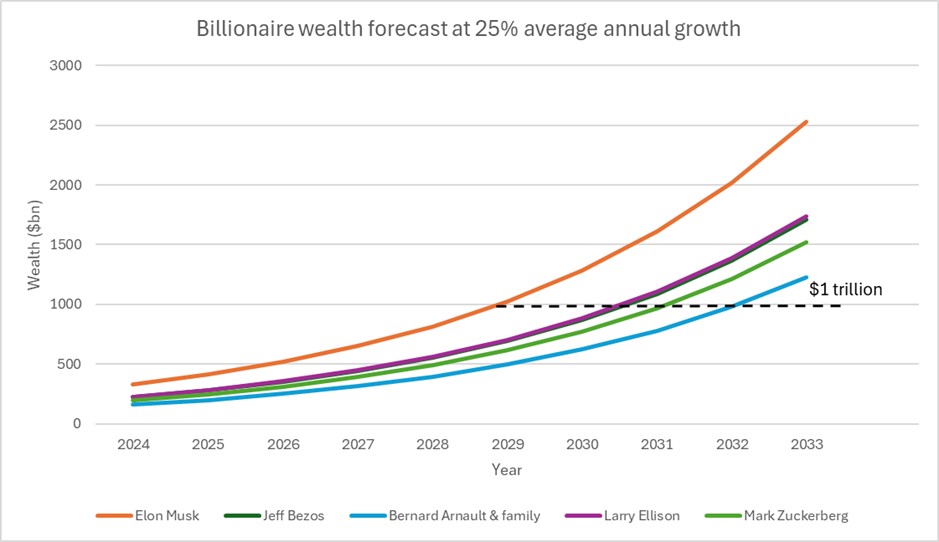
Who wants to be a trillionaire? How Oxfam worked out five men could win the ultimate wealth prize
January 21, 2025
Alex Maitland takes us through the number-crunching behind the headline prediction from this year’s Davos report: that there will be five trillionaires within a decade.
Read more >>
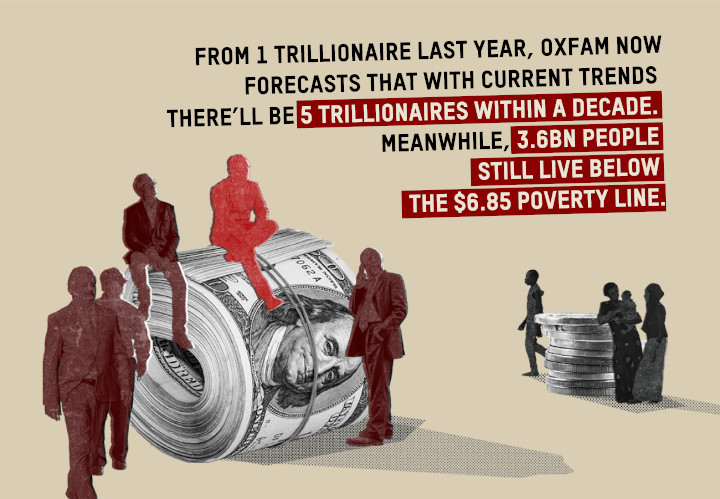
Get ready for the new trillionaire class: whose wealth will be built not on merit but inheritance, monopoly – and the legacy of colonialism
January 20, 2025
The world looks set to see five trillionaires within a decade — and more billionaires are now being created through inheritance than entrepreneurialism. Anjela Taneja and Harry Bignell introduce Oxfam’s 2025 Davos report, which reveals the scale of unearned wealth — and how those riches are built on a colonial legacy of exploitative global systems.
Read more >>

How billionaire ‘pollutocrats’ are driving our climate crisis – and what we can do about it
October 31, 2024
If everyone used private jets and superyachts like 50 of the world’s richest billionaires, the remaining carbon budget to stay within 1.5C would be burned up in just two days. Nafkote Dabi introduces Oxfam’s new climate report, which spells out how the emissions of the super-rich are driving inequality, hunger and heat-related deaths.
Read more >>
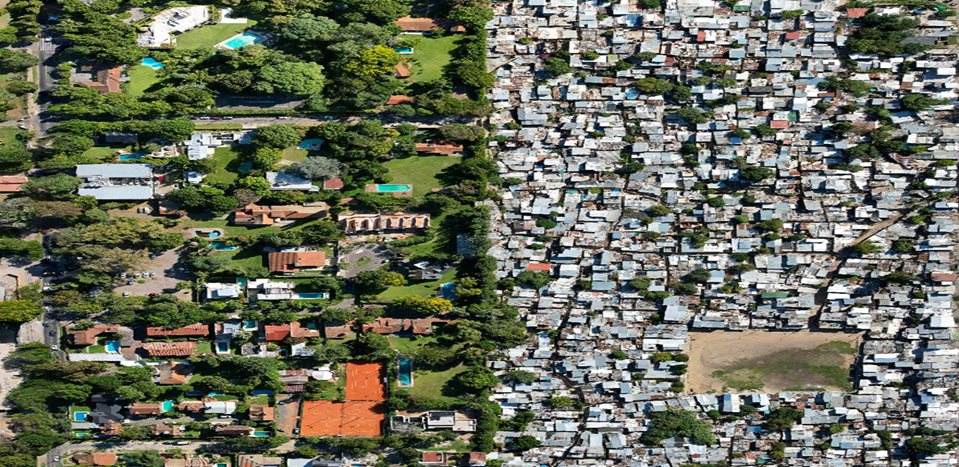
Governments across the globe are giving up on the fight against inequality: here’s what they should do instead…
October 23, 2024
New Oxfam analysis shows global Commitment to Reducing Inequality (CRI) has just hit a new low. Anthony Kamande shares insights from Oxfam’s biannual CRI report that ranks 164 countries’ policies – and offers three big policy changes that should be firmly on the agenda at this week’s World Bank/IMF annual meetings.
Read more >>
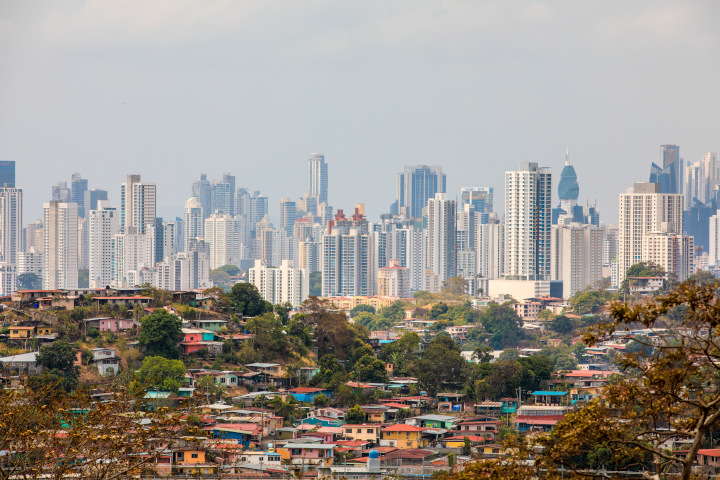
Why is inequality so sticky? The political obstacles to a fairer economy
June 6, 2024
Theory tells us that democracies should become more equal. So why are they still so unequal? Gideon Coolin, Emanuele Sapienza, and Andy Sumner on their new UNDP paper that unpicks the politics of inequality.
Read more >>
In praise of…. Logframes
August 5, 2021
Guest post from Graham Teskey My friend and colleague Lavinia Tyrell recently posted a note on LinkedIn, highlighting a recent WB Independent Evaluation Group report, which reflected on various methods of monitoring and evaluation currently used in development. In so doing, Lavinia referenced this diagram: As a fan of diagrams, as well as a long-time user of both the London
Read more >>