
September 10, 2025
Millions of women across the globe farm and look after land – yet are excluded from owning it, hurting their incomes, depriving them of wealth and undermining their other basic rights. Anandita Ghosh and Shivani Satija on a wide-ranging issue of the Oxfam-edited Gender and Development journal that not only examines structural obstacles to women owning land but also looks at broader themes, including the way deprivation of land rights adds to women’s care workload – and, crucially, how securing women’s land and water rights will be essential for global food security and climate resilience.
Read more >>

Jobs were moved – but not power: the failings of ‘decolonisation’
July 16, 2025
If the development sector is serious about decolonisation, it must stop confusing optics with real, transformational change, argues Awssan Kamal.
Read more >>

Ethical storytelling can help us fight back after the aid cuts
July 9, 2025
Many NGOs are now in danger of neglecting ethical communications as they chase desperately needed funds. But as Jess Crombie argues, ethical storytelling – or as she prefers ‘equitable storytelling’ – isn’t a ‘nice to have’, but rather one of the tactics that will help to raise the money to sustain delivery of aid.
Read more >>

Women in the Global South know exactly how to support their own communities – so why don’t we get behind them?
July 7, 2025
What does it mean for international NGOs to truly shift power? At Oxfam, we think our fund for grassroots women’s rights organisations, which is founded on the principle that our partners should decide what to spend money on, holds some of the answers. Oxfam GB CEO Dr Halima Begum writes here about a project that last week won two 2025 Charity Awards.
Read more >>
Why the campaign for reparations must put gender justice at its heart
January 30, 2025
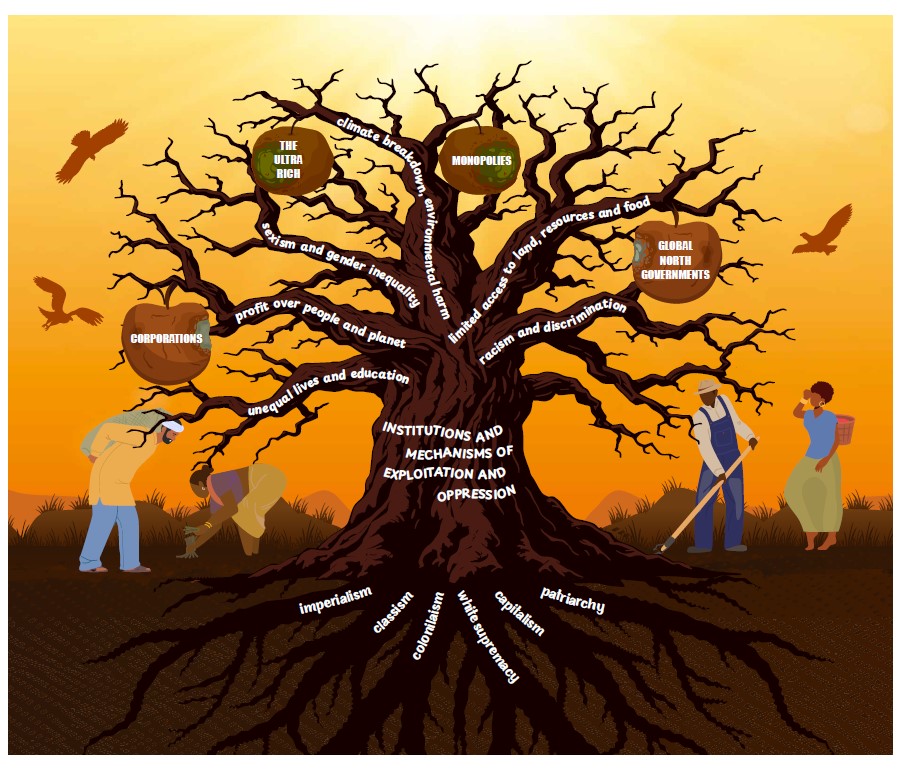
Millions of women in the Global South earn a pittance, own no wealth or land and do far more unpaid care than men – and much of their condition today can be traced back to the economic devastation caused by both colonialism and the extractive economic system it created. That’s why any plan for redress must include justice for women. In the latest blog in our World Economic Forum series, Lurit Yugusuk and Hazel Birungi set out five ways to do that…
Read more >>
Want to tackle inequality? Start with fair taxes and giving the Global South a real voice at the IMF and World Bank
January 22, 2025
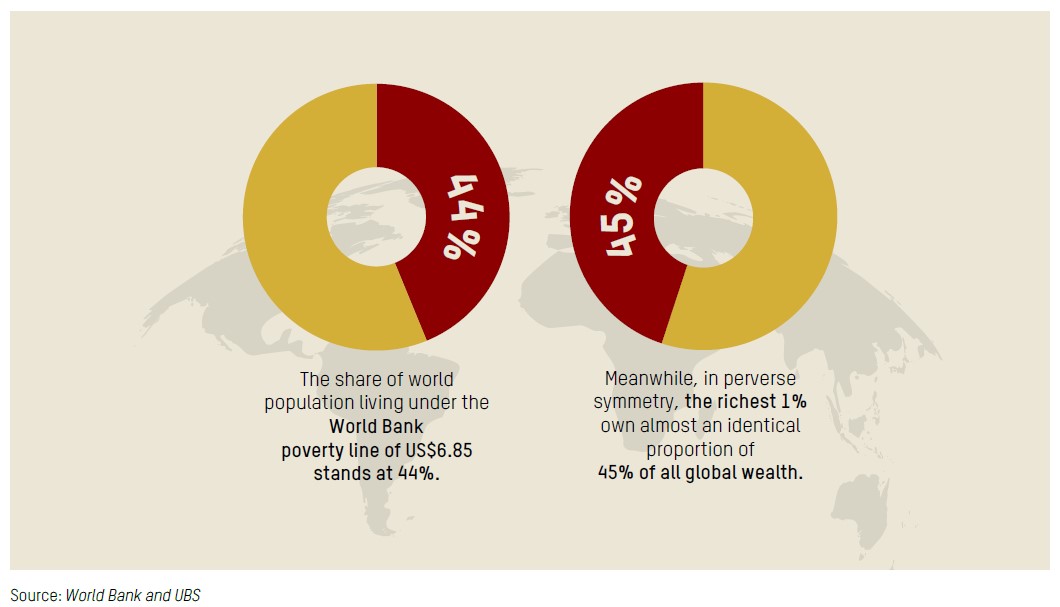
Global inequality will continue to spiral in a skewed system of international finance and governance that heavily favours the Global North, says Anthony Kamande in the latest blog in our Davos series.
Read more >>
Who wants to be a trillionaire? How Oxfam worked out five men could win the ultimate wealth prize
January 21, 2025
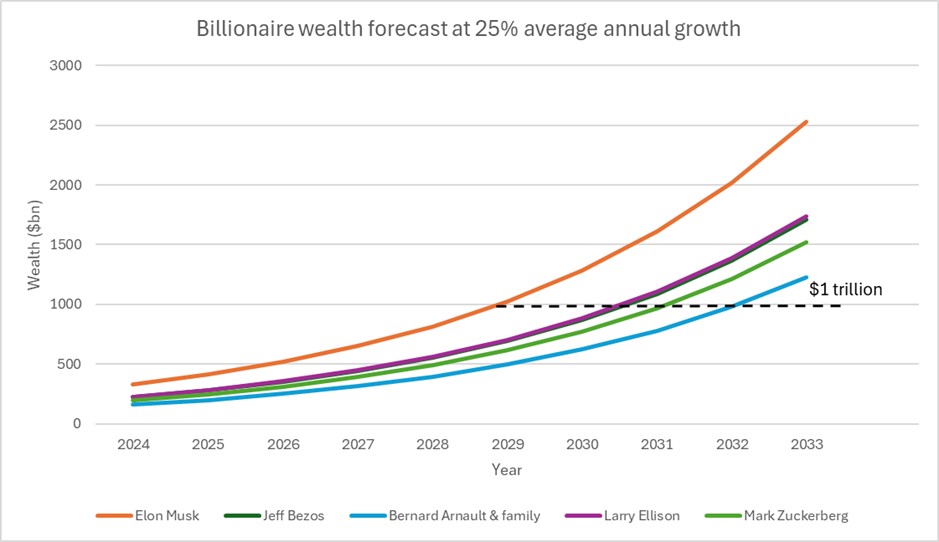
Alex Maitland takes us through the number-crunching behind the headline prediction from this year’s Davos report: that there will be five trillionaires within a decade.
Read more >>
Get ready for the new trillionaire class: whose wealth will be built not on merit but inheritance, monopoly – and the legacy of colonialism
January 20, 2025
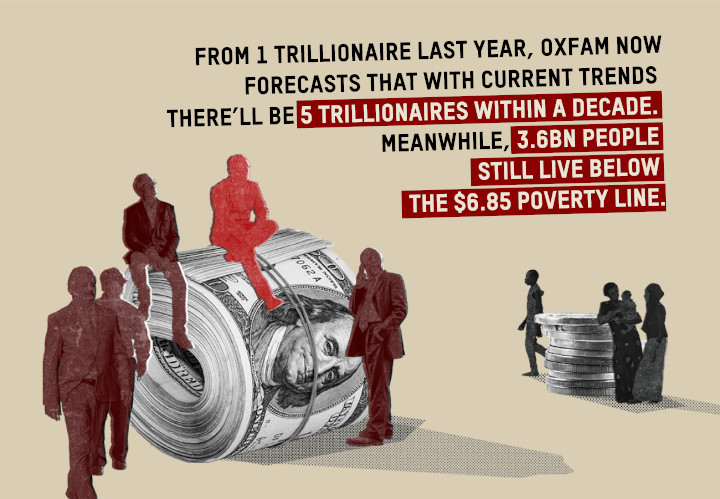
The world looks set to see five trillionaires within a decade — and more billionaires are now being created through inheritance than entrepreneurialism. Anjela Taneja and Harry Bignell introduce Oxfam’s 2025 Davos report, which reveals the scale of unearned wealth — and how those riches are built on a colonial legacy of exploitative global systems.
Read more >>
How my new book unpacks the problem with projects
October 9, 2024
The “project” is intrinsic to modern international development – yet this basic form of organising our work is not something neutral or benign, says Caitlin Scott, but has real, often distorting, effects on the way development organisations think and act.
Read more >>
Want to decolonise your INGO? Get used to taking a back seat…
May 30, 2024
‘Dinosaurs’ must become ‘chameleons’ and ‘ostriches’ change into ‘eagles’ as international NGOs fundamentally rethink their role so they can work in true partnership with local actors, says Oxfam’s Adama Coulibaly
Read more >>
Responses to ‘Are INGOs ready to give up power?’
December 20, 2019
On Wednesday, we republished this timely thought piece by Deborah Doane, which interrogates the power held by large NGOs and calls for a shift of power. The article clearly hit a nerve. Questions around #ShiftingThePower bring up enormous systemic (and existential) considerations that pose direct challenges not only to the structures we operate in, but also to our own behaviors.
Read more >>
Decolonising government through Indigenous ‘love-bombing’: a Tasmanian example
May 29, 2019
Dr Emma Lee is a trawlwulwuy woman from tebrakunna country, north-east Tasmania. She is a Research Fellow at Swinburne University of Technology, Melbourne, and an Honorary Member of the ICCA Consortium. To be an Indigenous person is to be a recipient of other peoples’ idea of what ‘development’ should look like. I am a trawlwulwuy woman from tebrakunna country, north-east
Read more >>